WE ARE HEALING,
CH. 2:
HEALING
THROUGH MUSIC

This project is more than a photo essay, it will always be more than an exhibition, and ever more than a single moment----We Are Healing, Ch. 2: Healing Through Music is a reflection of foster youth in power and we never die.
The Foster Youth Photo Crew built this project over three intensively creative months---with foster youth in leadership positions at all levels. From creative meetings over lunch, blasting our playlists through broken car speakers on the way to set, encouraging one another over dinner after our shoots, singing birthday songs in parking lots before a production, and cashing in every favor we had---it was more than a single moment.
For every music artist in front of our lens, their recognition only comes after years of self-developing---pushing themselves again and again, when no one was looking, to master their craft. Their vulnerability, creative storytelling, and thoughtfulness is what floods every image with an unending warm depth.
To say any of us were perfect during this project, would be a lie, but to say that we got back up after every mistake and kept going----that's a foster youth art practice.

FYPC on a long walk to the Getty
Foster Youth and Hip-Hop: A Shortened History with Plenty of Blind Spots


I am ready.”
“Tell me when you’re ready.
- GROUP HOMe,
Intro
It's there! A history in which we've been here. It's all laid out, for us to see, that everyone want's to be orphan, but no one want's to be an orphan. Our shortened history is meant only to honor the real one's and the allies, the truth speakers reflecting us in there reverbs.
Our focus here, is: the margins.
Approaching the art practice, of music making, as a tool to express frustrations, hunger, and fight for a new world. For this section, we focus on Hip-Hop as a vehicle of self-expression towards freedom from control---minding it's gaps---and still seeing ourselves in all of its mistakes.
Foster youth are ever present in popular media, in the origins of Batman's/Spiderman's character arcs, to Matt Damon's Will Hunting, Charles Dicken's racist-ahh Oliver Twist, and other popular images of stereotyped charactures. Hip-Hop through a foster youth art practice, allows our team (made of foster youth of color) to see a truer reflection of our stories and experiences----because we didn't inherit unlimited gold after we were removed from our parents, no spiderweb shoots from our wrists, we aren't white men in Boston (a super power in its own way), and we don't want to be adopted, cause we won't longer qualify for services after 18. And if these images get to be lived out and validated by popular media, we look to Hip-Hop to share our foster youth story: the one no one wants to be.

1990's rap duo, Group Home, used a group home intake form as part of their album cover for their debut album: Livin' Proof---a classic 1995 boom bap record focusing on the grimy truths of community members surviving the perils of the United States. When artists are self-titled after a foster youth experience and the artifacts of the community are plastered across a cornerstone of Hip-Hop history, what is the relationship between Hip-Hop and the foster youth identity?
Hip-Hop is the foster youth experience: gritty, excessive, policed, empowering, loud, demanding, BOOM-BOOM-BOOM----an endless barrage of non-stop sound. Hip-Hop artists flip scratches, to sample a song and translate its message to new ears: an audience playing their musical mashes under bed sheets, after lights out, away from all the rules.
It's Hip-Hop's ability to spin a dirty dealt hand into diamonds and gold---spinning our faith fast enough to turn into platinum. Where nothing makes sense---and that is us! Where every line holds more power than social workers held over our fates, where we went to learn more about history than our state sanctioned books were ever allowed to "teach" us, and where we found the words to best describe the love we wanted from this world.
Some of us don't feel happy all the time---we are angry, frustrated and do not need to believe in hope. On our walk to our newest placement, trying to remember the name of our new school, or in the chaos of screams coming from the other room, we need to feel seen and we don't need to hear a lie, to quote Sideshow: "it's never ever gon' be okay." Just as a spade is a spade, a violent machine is a violent machine. In all the pain, Hip-Hop carves an authentic space for us to feel everything, critique systems of oppression, and where no one can shut our lips.


- DMX,
Slippin'
We aren't just metaphors for a 50 year old genre, foster youth are in Hip-Hop: Black Thought, Kamaiyah, DMX, Xzibit, 50 Cent, and more---we are the lyrics, the writers, the images, the message (double entendre)! The margins have enough room for us all, the Hip-Hop artists raised by grandparents/aunts/sisters (aka kinship care), foster youth built in group homes/stranger homes/familiar homes, and the feelings of loss that come from the marginalized identity in the American landscape----the margins are home.
In Wu-Tang Clan's I Can't Go To Sleep music video, the opening shot is of the "Wu Foundation Orphanage House"---an image of a decrepit wooden house in the middle of an ominous forest, washed with a green halloween tint and matching spooky lightning blasting over eeriness---and inside, Wu-Tang Clan members sit in their own full-size beds sharing one room, 10 to a room, and rap of the darkest fears that keep them up. A set of images that are a call back to our first nights that we tried to sleep in our newest skin/identity and to think of it, during the music video's pre-production meetings, someone must have asked: What part of our society best captures the fears of these Wu-Tang lyrics? An Orphanage!
Pusha T does his part, in If You Know, You Know, after letting out a dirty yu-chh and spitting: "The company I keep is not corporate enough/Child Rebel Soldier, you ain't orphan enough," with no other image available to capture his feelings of isolation and years of trying to survive---the orphan is his only resort. Its a mash of messaging and defining that re-centers the foster youth identity as being able to pulsate a definition every other word combination fails to capture. It's the reading between the lines here, the abstract, the deeper meaning: that foster youth are below the worst. We are that which even the most graphic poets seem to fear. It's a nod from an ally that says to us: we need to feel what we want, especially if it's what others say we should not.
Kendrick Lamar, in Sing About Me, I am Dying of Thirst, uses a more descriptive set of lines to directly transcribe the intersection of poverty, race/ethnicity, state violence, and the foster youth identity: "This is the life of another girl damaged by the system/These foster homes, I run away and never do miss 'em." The presence of the community in the darkest truths of our realities is at times, only best reflected through the griminess of the Hip-Hop voice. In other words, non-foster youth institutions build images of hope for its set of saviors and Hip-Hop builds images of self-determination---and if you don't get it, maybe you aren't orphan enough.
It's a truth that we get to live, a set of experiences that bring chronic pains, pre-mature death, and loss---we are Hip-Hop. A reference point for those with no home, no family stories, no money, and never are we the spoiled kids inheriting oil wells (bars). Unlike the appropriation of Batman's foster youth, Hip-Hop writers speak to us more truer---in that, we are tired of the pedestal and won't take any more excuses as answers.
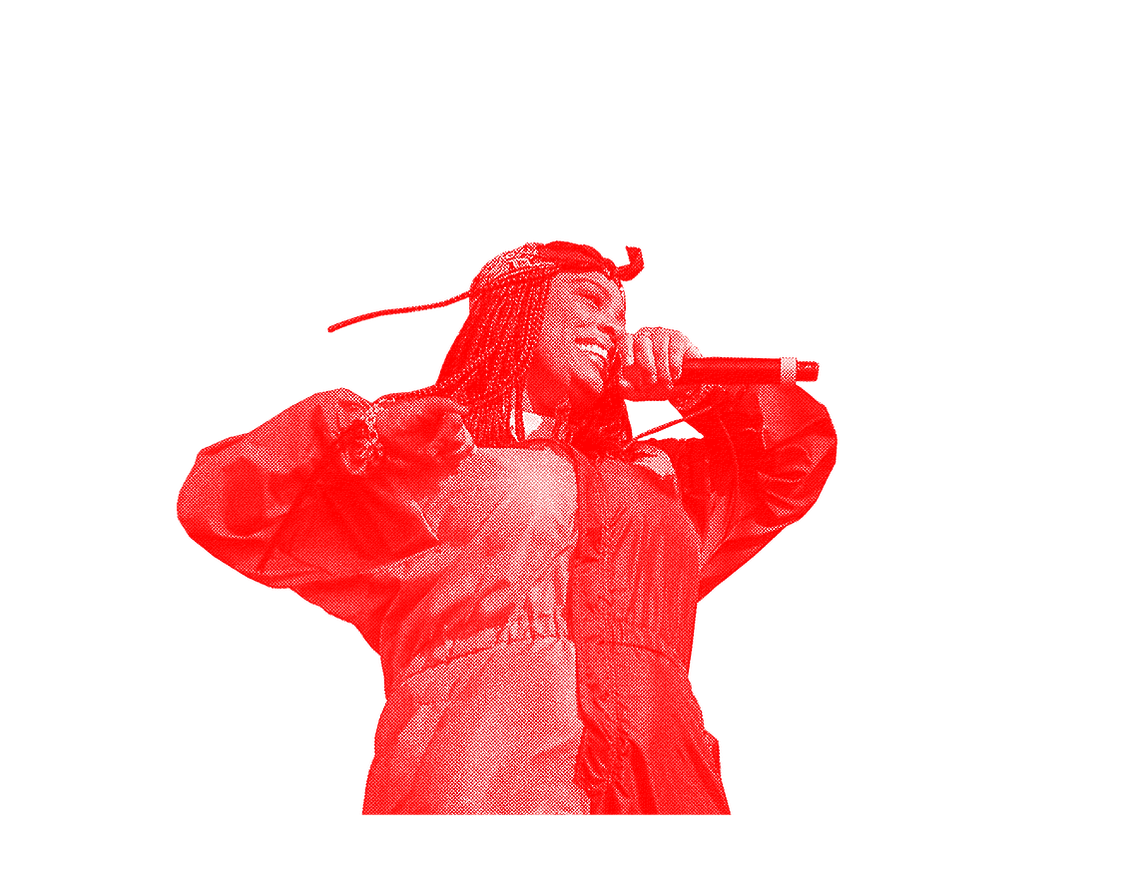
In a September 2024 interview, on the History of the Bay Podcast, Kamaiyah spoke on her foster care experience: "I wouldn't recommend it---I highly wouldn't recommend it! [LAUGHS] I don't think people understand how traumatizing it is for a child to get ripped out of a consistent family orientated environment, to be with a bunch of strangers. And I wasn't in one home, I was in at least 12---that's just in its own self, suffering for a kid."

In a 2021 Tweet, Kamaiyah also spoke directly on the life long implications of foster care: "It’s crazy cuz growing up in foster care and all the bullshit[...]you get a late start at life and no matter how far you make it you’ll always feel like you’re fighting for basic shit in life that should just be normal." FYPC brings in these comments alongside Kamaiyah's uplifting lyrics to demonstrate the power of foster youth through Hip-Hop.
- Kamaiyah,
How does it feel
FYPC puts forward the approach: we do not need to suffer to be great.
'Resiliency' demands that we needed to survive trauma, that we are only powerful after being put through a test. We are foster youth and we are powerful---that even those who 'failed,' are still us. A connection to Hip-Hop requires us to rewrite the prerequisites for our art practices---we speak to pain, without glorifying, we speak from recognition. That Biggie's lyrics are felt ("To all my peoples in the struggle"), that Benny the Butcher's listeners are a reflection of his experiences ("I do this for sufferin' children and checks from government buildings"), and behind all of Tupac's gold was another person of color trying to survive the worst of it ("We just got paid and we still was broke")---all of it, a set of poets teasing out threads of this larger systemic conversation that connects foster youth and Hip-Hop. That the conscious back-pack rappers that speak on opening our third eye, are highkey right---that the margins have grown big enough to demand the center to ask: who is the center?
This is the starting point, in which we understand that image production, literally and lyrically, impacts the understanding of our experiences. We Are Healing is a new reference point, that allows us to see ourselves in the building blocks of an engaged art practice---built, of course, from the margins.


- BLACK THOUGHT,
BECAUSE
For the fakes who take our identity and don't want anything to do with us---the feeling is mutual. For those who lived it, we recognize the shared nods, the acknowledging side eyes, and our coded language from one of us on stage. We know, that the whole world wants to play us, but that we will live forever in the lyrical cacophonies of the foster youth Hip-Hop archives, we are not one---death to the monolith---but a conjoined mess of conflicting spectrums and this is just one space you can join.
Our reverbs continue infinitely across space and time----and although we continue to fight for the death of the foster youth identity, that one day no one ever goes through this pain again, that we right now have a soundtrack of never ending booms, baps, and raps reminding us that at all points in time: we are ready.
Eight Photo Essays and A Therapist Circle
We had no idea what we were doing, it was just an idea, to give people we barely knew their own cameras, to never think that they would end up in a pawn shop in Montebello, or that we would be left on read and catch a FYPC bag on craigslist----it was the energy that carried us forward, it was the wishful thinking of what will come next that kept this project alive. We had no idea what we were doing, but we have to keep saying we did, we didn't have anyone to ask for help, we started answering one another's questions, and we kept developing our rolls before we got the last set back.
This is an appreciation in our faith, it was enough.
Selfishly---it is great that others will benefit from this labor, that strangers will be motivated, and that the program will receive its much needed praise for this work---we already won! We know what it feels like when your community member finds her confidence to direct the room, we traveled to the hottest land in the world and dripped in gold, in the bones of the dead system we had our own concert until the vinyl warped, we know what it feels like to dodge death for the shot, we know what the inside of William's studio tastes like, and we know what a Bay Area sunset sounds like from a Berkeley rooftop---We Are Healing has delivered us.
We are grateful to all that have supported this work and all of the labor conducted by our members, to see all of the change that this project has had on everyone: we already won!
One last time, to really drive the point home: all photographs for this series were shot on film, every camera and camera setting was handled by foster youth, everything here was built/designed/programmed/created by foster youth---please enjoy the following eight photo essays and a therapist circle:


