
A GREAT DAY

A Great Day by The Foster Youth Photo Crew
In 1958, the photographer Art Kane, created the photograph A Great Day in Harlem—capturing the gathering of 57 Jazz artists on a roll of black and white film. In 1992, the infamous photographer Gordon Parks, created the photograph A Great Day in Hip-Hop—capturing the gathering of over 200 Hip-Hop artists on a roll of black and white film. Kane and Parks' photographs are pillars in the photography world—demonstrating the importance of capturing the fast paced changing landscape of music built in the margins. Their photographs are a testament to the overbearing and ever demanding-ness of the creative world: the only way to win is through self-destruction. In their photographs are a few moments of still smiles and laughter—with each musician sent back onto their path of destructive creativity to not be forgotten. Photographing this brief moment in time on film brings in a chemical layer into our reading, in which light is reflected, bent, captured and permanently burned into our archives. The final photographs have been built by centuries worth of knowledge, experience, science, violence, self-discovery, and tons of hands—from the hands playing gold instruments, to the ones operating drum machines, the hands that pressed the trigger, and the ones working in a pool of chemicals under a red light. These photographs are more than spreads for Esquire and XXL—they were an electrified moment of smiles and laughter where every hand still had air in their lungs.
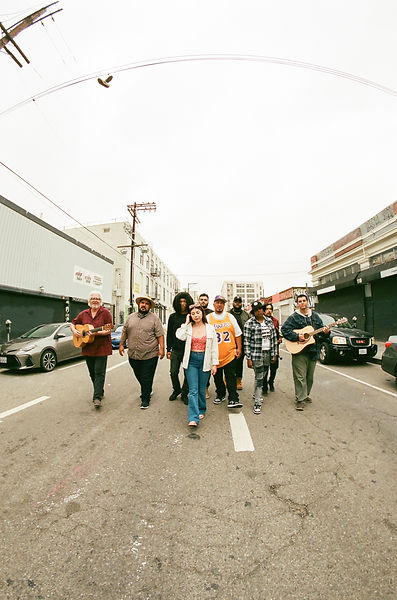
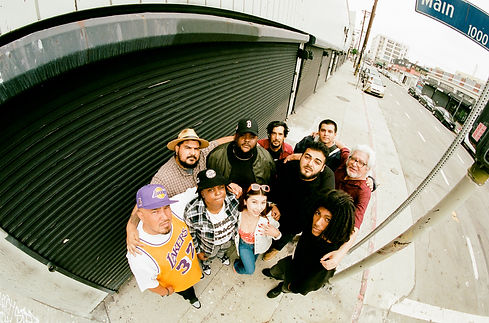
The Foster Youth Photo Crew took their immense talent and lack of experience to construct A Great Day by The Foster Youth Photo Crew. It was an intergenerational gathering of 10 artists that create music with the purpose to heal, photographed on film. It wasn't a gathering of artists from a single genre, or single form of music making, but a collection of ever evolving identities, interests and histories. Our photographers supported one another behind the scenes, got out of one another's shots, stopped traffic, picked up lunch, set up equipment—for once in the life of foster youth, we got our moment to capture an electrified field of smiles and laughter where every hand still has air in their lungs.


A Great Day by The Foster Youth Photo Crew should have never happened——
The foster youth identity placed all of our artists behind the lens and the artists in front of our lens onto a path of premature death. It is a testament to the abilities of each of our members, it's the fact that we can’t die, the ability to dodge traps, hop fences, flip cars on the 110.
A foster youth identity is not random, it is determined. We are the worst case scenario of our people’s histories: red lining, segregation, racial violence, poverty, educational erasures, book burning, etc.—that the after-life support systems band-aiding the lives that live out the best dreamt up hells of the racist bigoted big ego self-sustaining destiny planners choosing where we were going to end up—still live. That community depression is intimately tied to oppression, that the court mandated therapist never understood praying wasn’t going to be enough to stop foster care from destroying hope.
We are truly American made, built by the witnessing and experiencing of our cultural deaths. That foster youth are the lab rats in a vacuum, probed, starved, cornered—with rules built to limit our responses—and new laws meant to make us accept our fates. Only left with fools gold dangling around our necks.
And on top of the ashes, after everything that was falsely promised to us was burned down, years before the social worker ever showed up——that we stand on the bones of destroyed ancestors, that we stand on top, that we breathe in an answer, and smack the shit out of death: that there, that THERE, is where A Great Day starts.
Outside, inside, topical, chronic—
A Great Day took place in the shadow of Gordon Parks, that we offered a west coast twist to a photo interpretation of a photo interpretation, being a two fold re-interpretation of the best in the world. That FYPC, 4 years before this photo was built, was meeting on Zoom to talk through the body of work of Gordon Parks. That we learned that a camera sitting between Black/Brown fingers of artists means something bigger we don’t want to explain to y’all. That we learned from William Camargo how to decolonize our photography practice. That our pizza dinner, three weeks before our film was loaded on just another Saturday to the rest of the world—5 different blood lines shared a meal, brought together because of an understanding, a knowing that this was our shot out of it all.
It was in 2022, that FYPC first visited the Getty and saw the work of the Kamoinge Workshop—we hope (the only time we’ll ever hope) to have made them proud, that their images entered Brown brain matter and a spark was lit inside of a head full of gasoline. That in their chemical reactions printed by other chemical reactions, the foster youth identity saw itself reflected. That we entered the museum with a goal to create a permanent home here for us, that we build a body of work that sparks the next set, that at the end of the long walk we find where we fit in—and if we don't, we build it.
A Great Day was a day of anxiety, of finding a voice at the bottom of our throats, of eating burritos turned out of a hole in the wall, of dodging scatpack challengers aiming for our heads, of becoming a traffic jam off 11th and Main, it was a day of sweaty backs, of paying back a favor in 10 rolls of 120mm film, of running your 1st rig off your mom’s camcorder, of beating the crowd at the alleys, of mourning the day after loss, it was a day centuries in the making, wondering how Gordon Parks’ team did it, a day of re-cramming 100 lbs of gear into a 2003 Gold Accord with a suspension begging to die, a day where the whole team wasn’t together, where we pushed one another’s ideas to their limits, where we sent it full speed at a moving target, a day where we slept late and woke up early, and A Great Day was a day where no one wanted to scream “It’s a wrap.”
FYPC produced over 400 photos on film during the production of A Great Day by The Foster Youth Photo Crew—our team has selected a few of these photographs that try their best to capture the excitement and creativity of our moment. Below, alongside these amazing photographs, are a set of testimonials written by each of our FYPC artists that participated in the We Are Healing project—hear directly from our photographers the impact this project had on them and the importance to continue supporting more foster youth led creative work in the future.


Edward Castro, Creative Director: I had a lot of fun working with everyone on the photo crew. I was able do a lot of things that I had never done before in photography.
It was really cool that everyone trusted me to come up with ideas for each of our shoots. This project really changed the way I approach building my creative shoots. I got to learn for the first time how to use archival photographs from other eras to inspire my concepts. I stayed up every night before our shoots to find more work that can inspire the shoot. I found old punk zines from the 90's to build ideas for the Gabe shoot. I looked at so many album covers from the 2000's to get ideas on how to capture D's loud voice. It was the first time I ever got to lead the creative ideas of a project and it's because other places just don't care about what we have been through. This project was built by us, so it was actually for us.
The We Are Healing project inspired me to take my photography more seriously and apply to art fellowships, which is something I never did before. I became a 2024 Heidi Duckler Art fellow and used my skills from the We Are Healing project to put my first exhibition together. I cashed in some favors that Michael owed me and we put the exhibition up. This crew is always ready to help each other. I don't really have anything else like this in my life.
Each shoot was a lot of fun and meeting each artist, hearing their music was really fun. But the coolest thing that happened because of this project was speaking at UC Berkeley. I am 26, I grew up next to a cornfield in Sinaloa, Mexico and in some not-nice parts of Los Angeles. It was my first time traveling so far north, my first time ever stepping on a college campus, the first time I ever saw a professor, and the first time I spoke in front of a big crowd (haha).
I want to thank everyone on the crew for making me feel comfortable to be myself and for everyone coming together to make this project possible. Every time I look back at the photos, I still can't believe we built something so powerful.
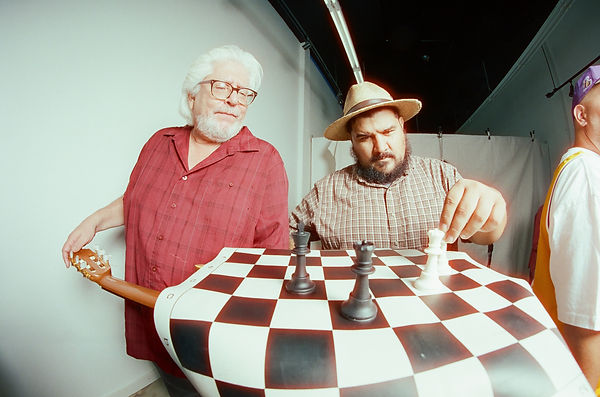


Ashley Papias, Lead Photographer: To me, the Foster Youth Photo Crew was about building community around an identity that had never truly been celebrated, one that has been primarily represented in very damaging and stereotypical forms - with our very existence we were challenging what harmful representations defined us to be. Going from a home that denied my foster youth identity to a space that encouraged me to claim it proudly was extremely validating. Being in this shared space allowed me to work much more comfortably with the other photographers, videographers, and with our featured artists. It was very easy to share my ideas, no matter how “out there” they felt because everyone was listening and taking into account what was being said. By our first lunch break we had already begun making jokes with one another, like jokingly fighting over which sandwiches belonged to whom. The shoots were filled with encouragement and it was noticeable how much everyone buzzed with excitement every time we walked onto a new location - it was invigorating and only made me more passionate about the work we were doing, we were healing in real time.
After working on the We Are Healing project with FYPC, I returned to college excited to work on more projects. I helped with a few student movements, served as a film photographer for multiple student orgs, had my work exhibited in two on-campus galleries, and I even had the opportunity to build my own small business that focuses on selling both my linoleum and photography prints. Without the encouragement of my fellow peers on the crew I wouldn’t have had the confidence to believe in myself or the work that I was doing. Last summer, I studied abroad with my school in Mexico City and took the chance to photograph my time spent there. It was initially done with the intention of personal memory keeping but once I returned to Los Angeles and shared my images with members of the crew they inspired me to build my own personal projects with what I captured abroad. Through this practice, I was able to further the connection between my cultural and foster youth identities. I am hoping to build a photography book with my work from Mexico City and begin building a professional archive. Without having this crew behind me I would not have been able to produce such great work alone. I am excited for any future opportunity that comes my way and I hope to be involved in more spaces that are made by foster youth for foster youth!


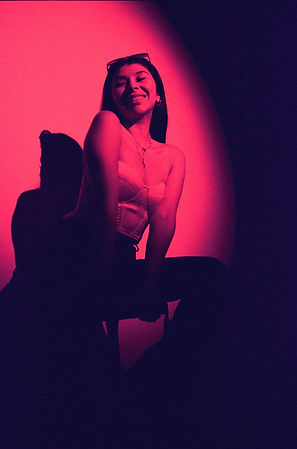

Eduardo Martinez, Video Director: In 2023, Michael brought me to downtown LA. We arrived at Pershing Square early in the morning.
In his possession was his full-frame camera, medium format camera, some rolls of film, and a smile that could be seen feet away. He wanted my help in photographing Robert—a rapper, poet, and historian. I remember feeling a mixture of anxiety and excitement. Anxiety is always the first emotion that comes to me whenever I agree to something new and unfamiliar.
Looking back, I realize that life turns on a dime. Two years later, those photos of Robert and the introduction to We Are Healing Ch. 1 started my endeavor into photography and film.
Before We Are Healing, I never had any real experience working on set. However, I was green and eager to bring our ideas to life. At my first meeting for We Are Healing Ch.2, I met with Edward Castro who shared his experience with me as a production assistant. He encouraged me to seek a program that would give me camera assistant training. Since then, I have been on multiple sets as a camera assistant. Currently, I am working on earning enough credits to join IATSE Local 600 as a 2nd AC.
I owe a great deal to this project. From pre-production to post-production, We Are Healing has helped me hone my skills as a filmmaker. It offered me an opportunity to grow as a professional in a meaningful setting. Each photoshoot presented new challenges that then led to unique solutions. I bring those skills to every new job. Working with everyone involved has been so much fun. I hope everyone who interacts with this project can walk away with that same feeling of joy that I felt while making it.


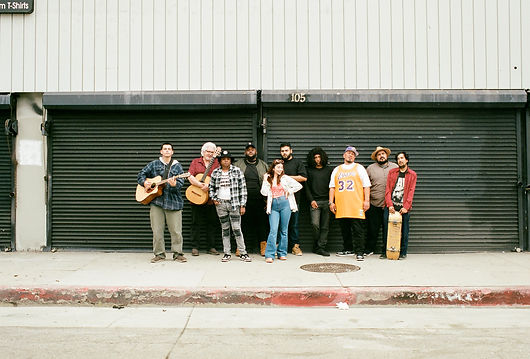
Cathie Arteaga, Photographer: The Foster Youth Photo Crew means a lot to me. It’s a group of inspiring individuals who have experienced the foster care system, just like I have. Working with artists who shared similar life experiences was incredibly uplifting. Before this, I hadn’t met many foster youth, let alone creative ones. Getting to know their stories made me feel seen and understood, and for the first time, I didn’t feel alone.
I believe there should be more opportunities like this across California, especially for creatives who’ve gone through the foster care system. Programs like this not only provide a platform for expression but also build a supportive community that can truly make a difference.
I had the privilege of working alongside amazing artists like Edward, who was the Creative Director for this project. It was inspiring to learn about his journey, from growing up in Sinaloa to discovering his passion for photography after moving to California. I was lucky that I kept working with Edward on art projects after We Are Healing. I was able to document his art process and learn even more from him, it was really great to feel like this project gave me a mentor.
Before We Are Healing, I didn’t even know what a photoshoot really involved. Everything about this experience was brand new to me. I had never used a film camera before, or understood the difference between a film camera and a digital one. Most of my prior experience with photography was just using my iPhone for photos and TikTok videos.
At first, I was nervous about the project because I had no prior experience, but that feeling quickly disappeared. I had incredible teachers by my side, ready to teach me everything I needed to know in the moment. Thankfully, I’m a quick learner and was able to pick things up pretty fast.
One of my highlights for me was directing a one-on-one photoshoot with one of our featured artists, Beelo. That experience not only taught me new skills but also gave me a chance to build my confidence.
I walked away from this project with so much knowledge and so many skills that I still use today. Some of my best creative work came from the photos I took during this project, and I was honestly impressed with myself. This gave me the confidence to step out of my comfort zone and take on jobs I never thought I would.
One of my biggest goals now is to create my own clothing line project, with all the models being former foster youth. We Are Healing opened my eyes to the importance of supporting the communities I’m a part of, and it’s inspired me to combine my creativity with my passion for giving back.
I think the We Are Healing project was incredibly important and necessary to create because there’s nothing else like it. It sheds light on the need to heal in order to grow—something I’m still working on myself. Being in a space filled with creative individuals who have faced real struggles in their lives was deeply inspiring.
I am realizing how much this project changed my perspective on what’s possible for me. I never thought about pursuing photography or videography as a career, but this year, I got paid to do both. It was a surreal experience that opened doors and paths I never imagined for myself.
This project is more than just art—it’s a movement that shows what can happen when people come together to heal, create, and inspire. I truly believe it will motivate others to start similar projects and continue this important work.
I think being a part of this project is a huge accomplishment in itself. I learned how to load a film camera, met amazing and inspiring people, and, most importantly, started to believe in myself. It means so much when others can see the potential in you before you even see it in yourself.
This project didn’t just teach me new skills—it gave me a new dream. A dream where I can share the powerful stories of those around me and build a life centered on creativity. That’s something I’ll always carry with me, and I’m so proud to have been a part of it.
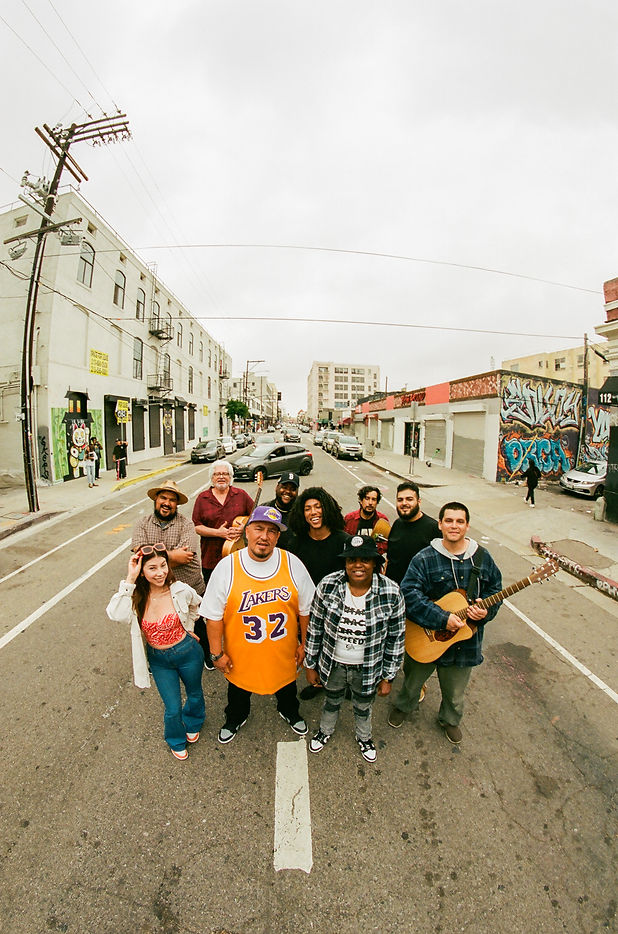

Florencia Valenzuela, Photographer: The Foster Youth Photo Crew has opened my eyes on who I am. As someone who didn't have many opportunities to artistically explore myself, I always felt as if the arts weren't for me. But given the opportunity to hold a film camera and capture the world through my eyes, I feel like I've unlocked a new piece of myself. Although I may still feel like a little poser because I'm still learning my camera, this crew has always been supportive in building each other up.
I remember that I had the chance to visit the Kamoinge Workshop exhibit at the Getty with VAPA all the way back in 2022. On the steps right outside the gallery, we scribbled down ideas on how the foster youth photo crew can continue the work that these artists built before us. I learned how photography can really change how we think of ourselves and see ourselves. It made the work we do with the photo crew feel really important. It is so great to see all we have done since that day.
It is such a privilege to share space and energy with each of these creative individuals - thank you Michael Papias for being the glue.



Michael Papias, Executive Producer: It has all been said, so all I can really say is: Thank you! It's a thank you to all of the artists that heard this idea and committed before we can even finish our ask—it's a thank you to all of our photographers, writers, and graphic designers that dedicated an immense amount of labor and time into this project—a thank you to all of our funders and project partners that didn't run away—and a bittersweet thank you to the system that gave me my community.
Every time I have had the opportunity to describe this project to others, I always found myself stumbling—I was trying to find the best word combination that captures something we haven't really ever seen before. How do you build an elevator pitch for a project in which you saw your community members find their voice right in front of you, where you learned to eat and laugh at the same time without choking, a project that put your community members inside of an ice cream truck, a liquor store freezer, an underground LA recording studio, in the middle of a desert during the hottest day on earth, behind the counter of a jewelry store, inside of an abandoned prison, climbing the ladder of a 50 foot water drum, inside a blanket insulated closet studio booth—this project happened only through the greatest combination of favors and breaks.
One of the first notes that I created when I began my role at VAPA in 2022 was titled: A Guerrilla Theoretical Framework—which abstractly describes a set of thoughts and actions that our program would adopt, in order to create an atmosphere that promotes impactful change led by foster youth. At that time, I never could have imagined this project—the impact that any single project could have on so many lives, or the personal transformation that unlocks inside of those that you give your full trust. The amount of pride that I have for this team is immeasurable and the amount of favors I owe each of them, is also immeasurable.
My expectation for this project is that it walks on its own legs—that it goes out and demonstrates to everyone the immense power of our community members. That it does make a few folks jealous—so they don't pass up the opportunity to join the next one. The foster youth art space, to quote one of the friends the foster youth identity has gifted me, is an emerging field—I am proud to be standing next to each of our FYPC members at the forefront of its unfolding.
